
Procore prices your growth. Jet.Build is flat-rate.
For vertically integrated developers who run pre-development, construction, and asset management — and are done paying more every time their pipeline grows.
The guide in seven takeaways.
- Only 9% of builders reach the adoption level they’re paying for. The other 91% keep paying full price for value they never capture.
- Procore prices on a percentage of your construction volume — so your software cost rises every time your development pipeline grows. Jet.Build is flat-rate.
- Procore engages where you have the least leverage (the construction phase) and is weakest where developers create and protect the most value: pre-development and the decades-long operational hold.
- When project data lives in a contractor-configured system, you pay for it but don't truly control it — and much of it is lost at handover. Jet.Build keeps lifecycle data owned by you, usable from pre-dev through asset management.
- Procore's strongest documented outcomes are reached by only a small fraction of teams; the gap is adoption, and adoption is a function of support.
- Jet.Build's support model — ~1-hour response, recurring training with the same team, in-person workshops, all included — is built to close that adoption gap.
- Consolidating development, construction, and asset management onto one platform removes the duplicate licenses, integration overhead, and data loss between phases that fragmented stacks create.
- A side-by-side Jet.Build vs. industry-typical Procore pricing comparison, plus an interactive calculator to run your own numbers.
Your growing pipeline is their growing fee.
Procore prices an annual fee, by product, based on your Annual Construction Volume — the aggregate dollar value of construction across your projects. (Procore's own pricing page.)
A general contractor can bill that cost forward into project overhead. A vertically integrated developer holds the asset and absorbs the cost permanently. Every time your development pipeline grows, your software bill grows with it — and stays in your operating cost base for the life of the hold.
- Net revenue retention of 106% in both 2024 and 2025 — customers pay more each year, on average, without adding a single new logo.
- By the end of 2025, 78% of recurring revenue came from customers using four or more products; 52% from six or more.
- The pattern Procore calls "land-and-expand" is the same pattern that, from the developer's seat, looks like a rising annual cost tied to growth. (Source: Procore SEC filings & earnings disclosures.)
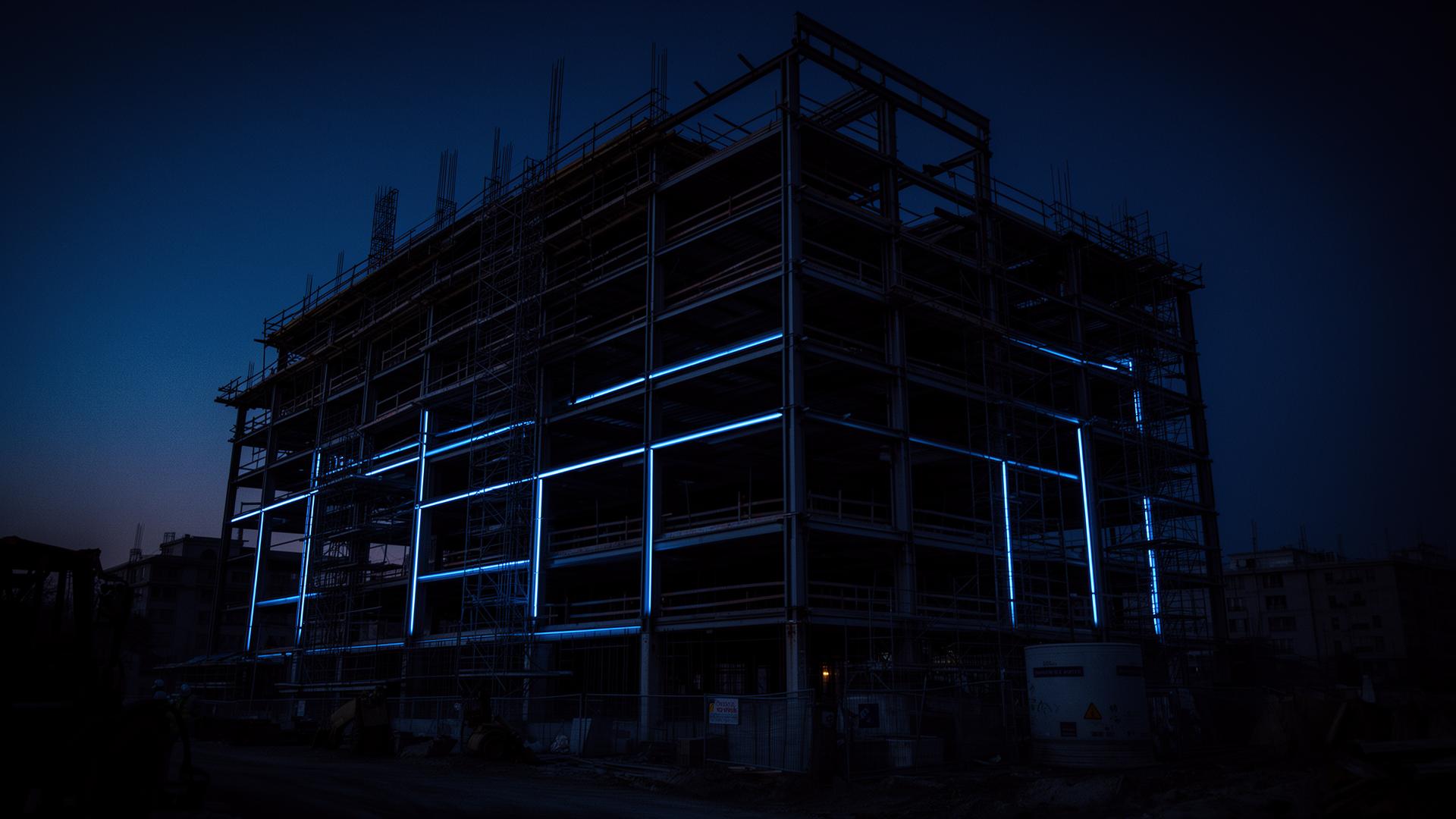
"Their growth model is your rising cost base — and as the owner, you don't bill it forward."
Priced as a % of your work
- Priced as a percentage of your annual construction volume
- Your bill grows when you win bigger work
- Renewal increases of ~5–14%/yr widely reported; steeper over long contracts
- Core modules and add-ons billed separately
- Implementation typically billed on top in year one
- Pricing isn't published — hard to benchmark
Predictable. Inclusive. Flat.
- Flat annual rate for the full platform
- Your bill doesn't grow when you win bigger work
- Predictable, transparent pricing at renewal
- Every capability included — no module fees
- Unlimited users, including subcontractors
- Foundations onboarding fee applies toward your license
The value lives upstream of where Procore engages.
Procore is built around the construction phase. Pre-development — acquisitions, feasibility, entitlements, design management, early budgeting before a project is greenlit — is where developers create and protect the most value, and it sits upstream of where Procore meaningfully engages. Jet.Build covers pre-development through construction through operations on one platform.
The MacLeamy curve
A widely accepted framework in AEC: your ability to influence project cost is highest in the earliest phases and collapses as design and construction advance. By the time Procore is fully engaged, the largest cost decisions are already made.
Presented as an accepted framework, not a precise statistic.
Preconstruction is where profit lives
- Organizations with above-average preconstruction are 52% more likely to report higher profitability.
- They struggle with rework 65% less often.
Source: FMI / Procore preconstruction research (Procore-sponsored). The data is powerful precisely because Procore's own study locates the value upstream of its core strength.
You hold the asset for decades. Hold the data, too.
Drawings, submittals, warranties, equipment specs, closeout documents — the data produced during design and construction has enormous value across the operational life of a building. When that data lives in a GC-configured Procore instance, the owner pays for it but doesn't truly control it, and much of it is lost at handover. Jet.Build keeps lifecycle data owned by the developer and usable from pre-dev through asset management.
The decisions that determine 20-to-30 years of operating cost are made in the years before turnover. The platform that holds that data should belong to the owner.
One platform across development, construction, and operations.
A vertically integrated developer typically runs separate systems for development, construction, accounting, and asset management. Every phase hand-off becomes manual re-keying and reconciliation — the "human as the integration layer." Jet.Build consolidates pre-dev → construction operations → asset management into one platform, removing duplicate licenses, integration overhead, and data loss between phases.
of estimated inadequate-interoperability cost was borne by owners and operators — nearly two-thirds of the $15.8B total.
NIST GCR 04-867 — 2002 data, illustrative and directional, not current.
Construction lacks an integrated platform spanning planning, design, construction, and operations.
Owners and contractors "often work from different versions of reality."
spent searching for project data — part of the ~35% of professional time spent on non-productive activities.
PlanGrid / FMI, Construction Disconnected (2018) — vendor-commissioned.
Every system boundary inside a vertically integrated developer is a data leak. Jet.Build collapses the stack into one ledger of record.
Procore's best outcomes are real. Almost no one reaches them.
The arguments above are developer-specific. The one below applies to your internal construction division — the GC team you've brought in-house. Procore publishes strong outcomes for its platform, and independent research — Dodge Construction Network, sponsored by Procore, covering 733 general contractors across 11 software platforms — confirms those outcomes are real.
But they only show up at full adoption. The same research scores teams across four maturity levels (light, moderate, advanced, optimized), and the gap between the floor and the ceiling is enormous.
Most teams never reach the ceiling. Only 9% of builders operate at optimized adoption. More than nine in ten pay the full volume-based price while capturing a fraction of the value the software can deliver.
And waiting doesn't fix it. Tenure is a far weaker predictor of results than expertise — and expertise is exactly what a complex platform makes hard to reach.
"You pay for the ceiling and operate near the floor."
Source: Dodge Construction Network, "Quantifying the Value of Project Management Software for Construction," sponsored by Procore. Gap shows light-adoption floor → optimized-adoption ceiling among contractors across 11 software platforms.
Jet.Build's wedge is simple: a platform built to be learned fast gets more of your team to full value — turning the ROI Procore's own sponsored research says most firms never capture into ROI you actually realize.
Adoption isn't an accident. It's a support model.
The gap between Procore's documented outcomes and what most teams actually realize comes down to adoption — and adoption is driven by how support and training actually work. Jet.Build is built to get your whole team to full value fast, with a support model designed around adoption rather than ticket deflection.
- Jet.Build
- ~1-hour response
- Procore
- Ticket-based queue; response times vary, and users report tickets open for weeks to months
- Jet.Build
- Direct access to the same team, start through full ramp
- Procore
- Submit a ticket or search the community; users report difficulty reaching the same rep twice
- Jet.Build
- Weekly recurring training calls with the same team, plus in-person workshops
- Procore
- Self-serve, on-demand courses (Procore Academy); on-site/custom training billed as additional fees
- Jet.Build
- Included; structured Foundations program, live in under 14 days
- Procore
- CoreStart professional-services package starts at $5,000 for a 12-week onboarding; complex deployments $10,000–$30,000+
- Jet.Build
- Custom-built per client, included
- Procore
- ERP/accounting connector setup billed separately (e.g., ERP Launch Services)
- Jet.Build
- Flat, all-inclusive
- Procore
- Support tier, training, and implementation frequently priced as add-ons
Comparisons reflect publicly available information, Procore's own published materials and SEC filings, and customer-reported experiences as of June 2026. Procore is a registered trademark of Procore Technologies, Inc. Jet.Build is not affiliated with or endorsed by Procore.
Procore's own sponsored research shows the documented outcomes are reached by a small fraction of teams. The difference isn't the software's ceiling — it's whether your team ever gets there. Jet.Build's support model exists to close that gap.
Seven ways the economics change.
Lower annual software cost
Flat-rate for the full platform, every capability and unlimited users included — commonly 60–70%+ below industry-typical Procore pricing.
No ACV success penalty on a growing pipeline
Winning more work — or adding another asset to the pipeline — doesn't raise your bill. Across a multi-year hold, that flat cost line compounds against a percentage-of-volume curve.
Faster adoption, lower training burden
New hires reach productivity in a fraction of Procore's three-to-six-month ramp, cutting training cost and lost capacity. In the Dodge research, contractors reporting productivity gains from onboarding new or replacement hires rose from 21% at light adoption to 74% at optimized — the faster your team reaches full capability, the sooner every new hire pays off.
Preconstruction & project planning
Planning, estimating, bid and budget development, and scheduling live in the same platform that runs execution — clean handoff, no leaks between systems. The same research shows the handoff from preconstruction to project management improves from 35% to 80% of contractors as adoption deepens — clean planning-to-execution flow is one of the biggest expertise-driven gains.
Learn more →Workflow automation
Build and run the approval and process workflows your team actually needs, removing the manual coordination that eats PM and admin hours.
Learn more →Jenny — AI built into the work
Jet.Build's built-in AI assistant, available today and improving through regular releases. Jenny takes friction out of repetitive PM and admin work — drafting and routing items like RFIs and submittals, searching documents, and pulling reports.
Potential margin improvement
Where your technology cost is recovered through fixed general conditions, overhead, or a negotiated allowance, lowering actual software spend can improve margin. Depends on your contract structure, cost-of-work definitions, and audit rights — evaluate with your finance and legal teams.
Learn more →Jet.Build vs. industry-typical Procore pricing.
Procore figures are benchmark estimates from public reporting and customer-reported examples — not a quote for any specific firm. Your real number goes into the calculator below.
- Jet.Build
- ~$10K
- Procore (est.)
- ~$36K
- Annual savings
- ~$26K
- 5-yr cumulative
- ~$157K
- Jet.Build
- ~$24K
- Procore (est.)
- ~$72K
- Annual savings
- ~$48K
- 5-yr cumulative
- ~$294K
- Jet.Build
- ~$55K
- Procore (est.)
- ~$135K
- Annual savings
- ~$80K
- 5-yr cumulative
- ~$501K
- Jet.Build
- ~$98K
- Procore (est.)
- ~$280K
- Annual savings
- ~$182K
- 5-yr cumulative
- ~$1.12M
- Jet.Build
- ~$150K
- Procore (est.)
- ~$485K
- Annual savings
- ~$335K
- 5-yr cumulative
- ~$2.04M
- Jet.Build
- ~$200K
- Procore (est.)
- ~$750K+
- Annual savings
- ~$550K+
- 5-yr cumulative
- ~$3.31M+
Mid Portfolio is the default scenario in the calculator below.
5-year cumulative assumes Procore escalating ~7% annually and Jet.Build held flat; software cost only. Annual savings range ~59%–73% across tiers. Dollar savings widen as you scale — exactly where volume-based pricing costs the most.
RISE, a federal construction operator, runs $9B+ of mission-critical work across the Northeast on a single unified Jet.Build platform — coordinating large, complex, high-oversight delivery with the audit posture government work demands. Flat-rate software scales to the most demanding GC environments without the cost curve climbing with every project.
Run your own numbers.
No hard-coded percentages. Every figure below is derived from what you enter. Adjust the inputs to match your situation.
Leave blank to use industry benchmark.
Dodge research: nearly half of optimized users save five or more hours per week. We default to a conservative 2.
- 5-yr software savings
- $501K
- 5-yr productivity savingsestimate
- $700K
- Avoided renewal escalation
- $101K
- Payback period
- 1 mo
The real cost of switching — and how we de-risk it.
A serious decision accounts for the cost of change. Here it is, on the table.

The honest costs
- Data migration — active projects, contacts, financials (commonly one to a few weeks for active data)
- Retraining on new habits
- A short-term productivity dip during transition
- Integration rebuilds (Jet.Build integrations are custom-built per client, fitted to how you work — never generic plug-and-play)
- Internal change management — adoption is organizational, not just technical
How Jet.Build Foundations de-risks it
- A defined migration plan — prioritize active/recent data, archive the rest
- Structured, hands-on onboarding that compresses time-to-value
- Custom-built integration scoping fitted to your stack
- A single accountable path through the transition
- The Foundations fee applies toward your annual license — onboarding is a credit, not a sunk cost. Not the right fit at month four? It ends cleanly, no further commitment.
Flat-rate software for developers who build, own, and operate.
Run your own numbers, then let's talk about your pipeline.
Comparisons reflect publicly available information, Procore's own published materials and SEC filings (including ACV-based pricing, ~106% net revenue retention, and 78% of recurring revenue from customers on four or more products), and customer-reported experiences as of June 2026. Procore is a registered trademark of Procore Technologies, Inc. Jet.Build is not affiliated with or endorsed by Procore. NIST interoperability figures (GCR 04-867) are 2002 data, illustrative and directional. The MacLeamy curve is presented as an accepted AEC framework, not a measured statistic. Lifecycle-cost (~80%, Penn State) and data-loss-at-closeout (~30%, Emerson via Procore) figures are presented as ranges. FMI / Procore preconstruction and PlanGrid / FMI "Construction Disconnected" (2018) statistics are attributed; the latter is vendor-commissioned. Adoption statistics are drawn from Dodge Construction Network's "Quantifying the Value of Project Management Software for Construction" (sponsored by Procore; 733 general contractors; 11 software platforms). Jet.Build is not a financial or legal advisor; productivity, training, and technology-recovery figures in the calculator are adjustable assumptions to be validated against your own operations and contracts.